Archives

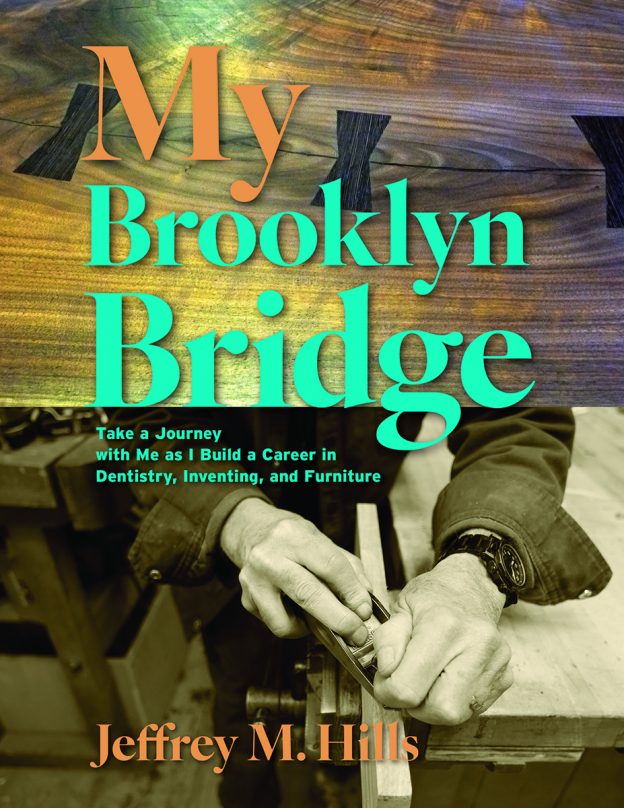
My Brooklyn Bridge

First-time author Jeffrey M. Hills invites readers to take a journey with him “over the bridge” as he builds careers in Dentistry, Inventing, and Furniture Building all while building bonds with family and friends. A warm and inviting memoir from a talented individual featuring vignettes of his life and times, illustrated with well over 100 beautiful photographs.

Hills describes his book best in his own words:

Over the last decade I have kept track of my favorite stories that I have told. I have also thought deeply about what endeavors have meant the most to me, both in my mind and in my heart. Put another way, imagine I am in hospice and my Grandchildren come to visit me for the day. They say, “PopPop, tell us some of your favorite stories, we would love to hear them.” I would want to entertain as I love, with humor and irony. I would also want to convey who I was, the life I have lived, the legacy I want to go forward to the next generation. As much as possible there is a chronological order to these stories, either by first date of onset or by their “true arc” in my life. For exam- ple, “Las Manos del Hombre,” the story of my career as a furniture maker, had many firsts and achievements in the 50s, 60s and 70s. By the 80s my exceptional growth of talent and consistently fine work and then professional recognition began to occur. I chose therefore the 80s to place the story, yet it is clear that the beginnings were much earlier and my Gallery experience most currently significant and ongoing. One can read and enjoy these stories as special and individual experiences to be enjoyed as such. One can also use the Table of Contents as a guide for the appreciation of intersecting and the over lapping sense of time and experience. In other words, these personal snapshots of my life can be simply enjoyed or more complexly experienced. I am both honored and grateful to share my life with you.
Bruce Grossman

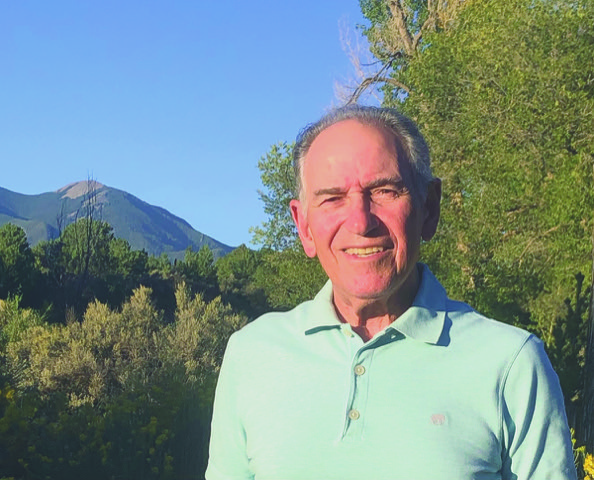
Born in Chicago but raised in Los Angeles, Bruce Grossman traveled in Europe after graduating from UCLA in 1969. He worked as a teacher and photographer in San Francisco until moving to Taos in 1976, where he continues to live and work as a psychotherapist. We Go On Living, his book of poetry about the death of his father, was published in 2007. The Captive, a novel about Sandy Koufax, awaits publication. He is married to pastel artist Cindy Grossman and has two sons, both born in Taos.

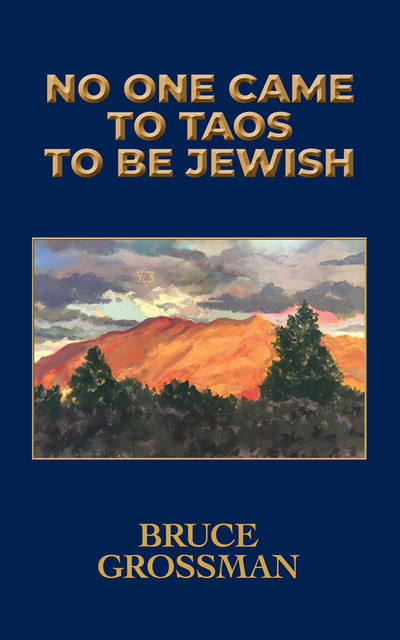
No One Came to Taos to Be Jewish

Part memoir, part history, “No One Came to Taos to Be Jewish” is an extraordinary story of personal and communal transformation. The narrative documents a spiritual awakening among a group of people who came to a small, mostly Hispanic town in the Sangre de Cristo mountains of Northern New Mexico to ski, hike, and get away from the banal lifestyle of urban and suburban America. They happened to be of Jewish descent, but discovering their own heritage in their own personal way certainly was not on any of their agendas. “No One Came to Taos to Be Jewish” tells the tale of these people and the groups they created over a period of forty years.

Aspen Song Kids

We are the Aspen Song Kids from Taos Pueblo, a beautiful place in Northern New Mexico. Our mission is to preserve our culture, our heritage, our tradition, and our language. We do that through our art. We give our thanks to our elders and our ancestors. Our grandparents and great-grandparents were artists. If it were not for their hard work, we would not be here today. We carry on their legacy. We give thanks to the artists who came before. We get our name, Aspen Song Kids, from our great-great grandfather whose name was Aspen Song. We didn’t know him in person as he had passed away before we were born, yet, we honor him with our name.

Sacred Spiral

We are the Aspen Song Kids from Taos Pueblo, a beautiful place in Northern New Mexico. Our mission is to preserve our culture, our heritage, our tradition, and our language. We do that through our art. We give our thanks to our elders and our ancestors. Our grandparents and great-grandparents were artists. If it were not for their hard work, we would not be here today. We carry on their legacy. We give thanks to the artists who came before. We get our name, Aspen Song Kids, from our great-great grandfather whose name was Aspen Song. We didn’t know him in person as he had passed away before we were born, yet, we honor him with our name.

The paintings and stories in this book were created by us, the Aspen Song Kids. Everyday, after school and on the weekends, we walk from the day school to the Pueblo village where we practice our art and practice speaking Tiwa, our native language. We love learning from the elders about the old ways so we may carry on the knowledge to our children and grandchildren in the years to come. We are proud to share our art and to honor Taos Pueblo with this book. – Aspen Song Kids

Lucy Herrman

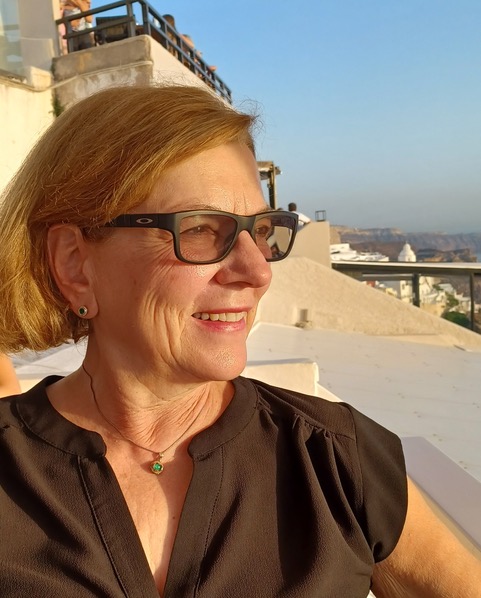
Lucy Herrman is a writer, painter and chef. She was founder and publisher of the award-winning literary small press, Syncline. Her writing has appeared in a number of literary magazines. Currently, she writes a food column for The Taos News. She is also a dedicated painter, and her artwork has been exhibited widely. Herrman lives in New Mexico with her husband, Dirk. They have two grown sons.

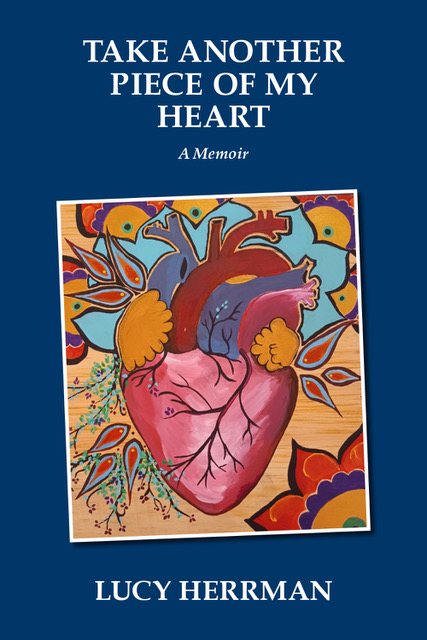
Take Another Piece of My Heart

Ten years ago, while skiing in Colorado, Lucy Herrman’s husband, Dirk, suffered an aortic dissection, an almost always fatal tearing of the lining of the aorta. The survival rate of an aortic dissection is less than 20 percent. Some well-known victims of aortic dissections include Richard Holbrooke, John Ritter, Alan Thicke, and Bill Paxton to name a few. Miraculously, Dirk was one of the rare survivors. But as he later said, “When you cheat Death, Death doesn’t let go so easily.”


Take Another Piece of My Heart is the first-person account of a harrowing medical journey. The book reads like a thriller—offering insights into healing and recovery from one of the deadliest emergency diseases imaginable—a narration from the perspective of the person who mustered strength and hope on the sidelines.


“I’m loving this book from the edge of my seat!”—James L. McManus, author of Cowboys Full and Chin Music.

Martin Torres

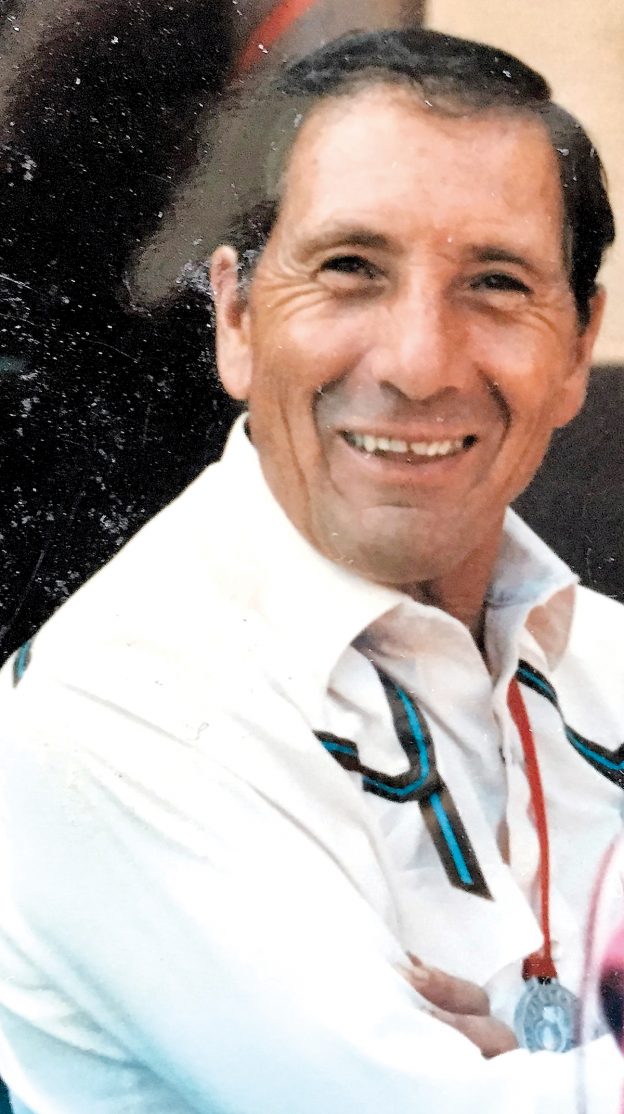
Martin Torres was born on January 30, 1929, to Onesimo Valentin and Ana Torres and raised on a ranch in Arroyo Seco, New Mexico. Martin was encouraged by his wife, Elma Tafoya Torres, to write this book about his father, Onesimo. Martin started herding sheep at the age of eleven in Tres Piedras and Tierra Amarilla. Aside from his entrepreneurship, Martin continued ranching—sheep, cattle, and now elk. Today, he is retired in Taos, New Mexico.

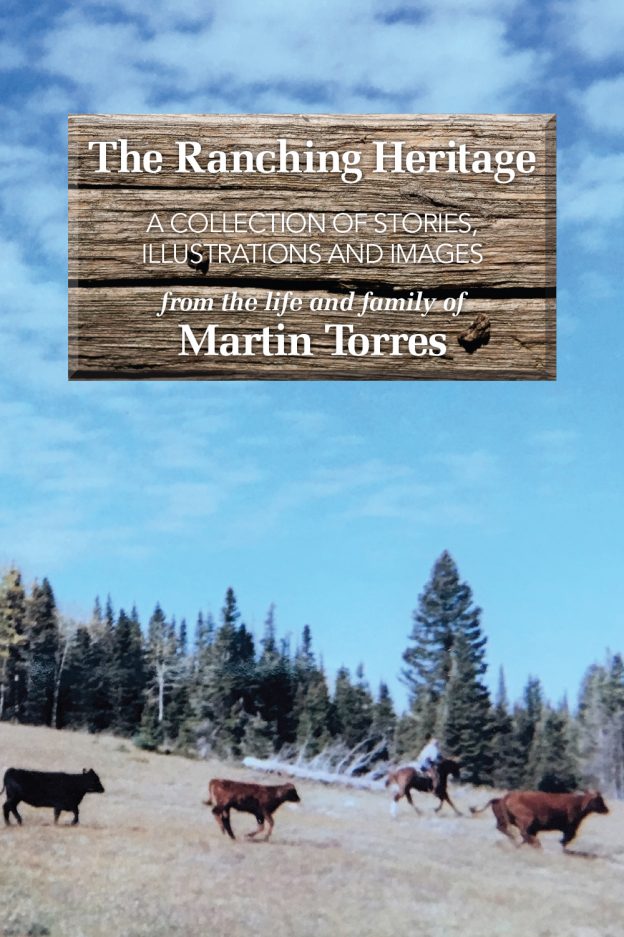
The Ranching Heritage

Martin Torres was born on January 30, 1929, to Onesimo Valentin and Ana Torres and raised on a ranch in Arroyo Seco, New Mexico. Martin was encouraged by his wife, Elma Tafoya Torres, to write this book about his father, Onesimo. Martin started herding sheep at the age of eleven in Tres Piedras and Tierra Amarilla. Aside from his entrepreneurship, Martin continued ranching—sheep, cattle, and now elk. Today, he is retired in Taos, New Mexico. This book is a collection of personal stories, illustrations, and images of Martin Torres, highlighting the life of Onesimo and Ana then transitioning to his own life with Elma and their children. He recounts the days of ranching with his father, when life was arduous yet simple, and how Onesimo’s gutsy business moves amounted in assets to make him one of the wealthiest men in northern New Mexico. Martin also shares short stories about cultural traditions and outstanding women, who also blazed many trails in their fields.

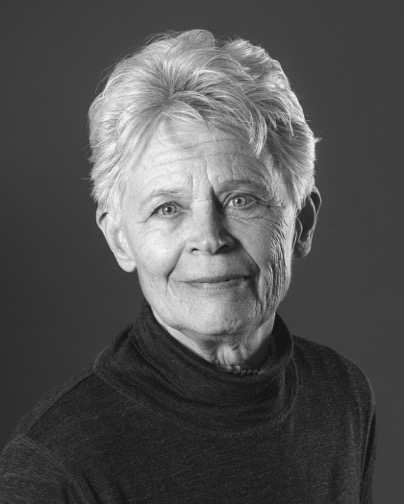
Margaret J. Hansen

Margaret J. Hansen loves to tell stories. She wrote The Wellman Stories because she likes you to be flushed with feelings — like the startle of paradox, like confidence in healing — particularly confidence in healing.


She has an undergraduate degree in Biology from the University of Iowa and a Doctor of ­Chiropractic degree from Palmer College of Chiropractic. Although she currently lives in Taos, New Mexico, she returns several times a year to work with her Eastern Iowa network.


As a white middle-class girl from the Midwest, many decades ago she had to discern and unlearn, among others, these three duplicitous teachings: Trust “progress.” We are all the same. Be nicey-nice.


Find her at margarethansen.com.

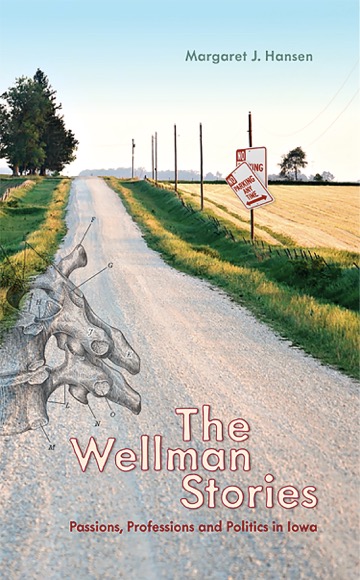
The Wellman Stories: Passions, Professions and Politics in Iowa

Thirty-eight plus one fascinating stories!


Two women chiropractors, Drs. Karen and Margaret, also life partners, happen into a small Iowa town called Wellman in 1986, just thirty-five minutes from Iowa City, home to the University of Iowa. We arrive after a crushing farm crisis, with no plan to stay, and yet, we do stay because the community seems generally favorable. We are successful, independent and do pioneering work for nearly two decades … until we flee.


We discover we have become prey to the repeating media loop of fundamentalist hate and the growing influence of conservative churches.


The Wellman Stories are about our interactions with the characters left to inhabit the faded town. A wry, funny, tragic memoir of hogs, healers and haters.


Travel country roads to the rural town of Wellman, Iowa. Peek behind that inscrutable curtain of corn with these stories about two women—partners and chiropractors—who unwittingly challenge the status quo and political mindset of a small, provincial community.


F.R. Bob Romero

F.R. Bob Romero is a ninth-generation New Mexican and a native born Taoseño. He served as president of the Taos County Historical Society from 2002-2009. He taught history courses at Mesa State College in Colorado, and also taught at four colleges and universities in New Mexico, including the University of New Mexico-Taos. F.R. Bob Romero is co-author of A Brief History of Taos, a contributing author of Taos: A Topical History, and author of History of Taos.

Roots of Enchantment

This is the extraordinary story of four ordinary men from Northern New Mexico—the roots they planted, their history, and the legacy they left in the Land of Enchantment.

“ROOTS OF ENCHANTMENT is a history of Northern New Mexico on a grand scale that is given much insight and vividness through the intimate personal lives of generations of Romero and Mondragon family members. Their stories are interwoven throughout a panoramic overview comprising centuries. It’s a fascinating journey that moves back and forth in time from Juan de Onate to Barack Obama. In all, this is an intricate and valuable history lesson and also a powerful memoir. I loved it. —John Nichols, Taos, New Mexico

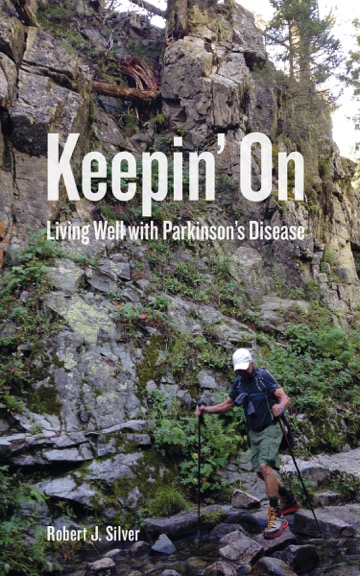
Keepin’ On

Written for fellow Parkinson’s patients, their families, and their friends, Keepin’ On chronicles a life of love, loss, longing, work, sports, travel, friendship, and intimacy—all against the backdrop of progressive Parkinson’s disease. Twenty chapter scenes explore issues ranging from the frustrating unpredictability of prescribed pharmaceuticals; loss of function; hope and inspiration; overcoming challenge; generosity and the kindness of strangers; the helpless concern of friends and family; expert medical care; comic relief; and more. Keepin’ On defiantly rejects the initial prophecy—the crippling of body and mind. It’s one person’s version of a condition that varies widely in its symptomatic expressions. Keepin’ On recounts binds, grinds, and occasional triumphs in a continuing quest for a fulfilling life despite Parkinson’s disease.

The writing is intended to help inoculate Parkinson’s patients against the soul-savaging corrosiveness of hopelessness and despair, and to comfort friends and family—awash in feelings of worried impotence—who love and care for them. In the end, Keepin’ On recounts a refusal to surrender to Parkinson’s and encouragement to Silver’s fellow Parkinson’s patients to keep on keepin’ on.

Patricia Pollard

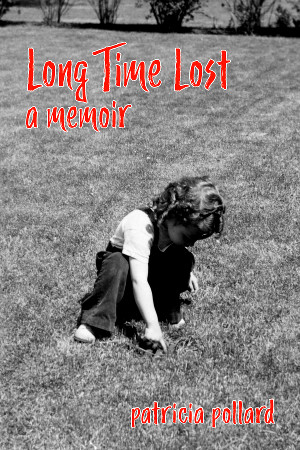
Patricia Pollard is an artist and writer living in Taos, New Mexico. Both an adoptee and a birth mother, in Long Time Lost she chronicles her journey from unloved child to incapable mother. She tells her story honestly and openly in hopes that it will be an inspiration to other women.

Longtime Lost

Those of us women who were blessed with good and loving mothers, who taught us by example how to be good and loving mothers in turn, can scarcely imagine a life without those bedrock blessings. In her searingly honest and powerfully written memoir, Long Time Lost, Pat Pollard opens our eyes—and our hearts—to another reality. Adopted as an infant by a couple in their late middle age, then losing her adored and adoring adoptive father to an early death when she was seven, Pat was left alone with an angry, resentful, and abusive adoptive mother. The heartbreak that follows in Pat’s heroic journey to find her true self is sure to deepen our understanding of and compassion for unloved and unwanted children.

—Bonnie Lee Black, author of Somewhere Child (Viking Press)

Lorraine Lener Ciancio

Lorraine Lener Ciancio’s poems and essays have been published in numerous anthologies and literary reviews. She wrote for a weekly newspaper’s arts section and published articles in magazines on subjects close to her heart, as well as others she wasn’t really interested in. Her photographs have appeared in many different publications and in the books of other authors.


She was the longtime editor of the SOMOS annual anthology, Chokecherries, and curated Right to Write programs sponsored by PEN America and SOMOS ((the literary society of Taos, New Mexico). She lived in Taos, New Mexico, for many years and now lives in northern New Jersey, across the river from Manhattan. Close by, but not too close, to where she started out in The Bronx.

From Salt to Sage

From Salt to Sage is a collection of personal essays that captures the arc of a colorful American life, beginning with the author’s Italian family in New York through her flight to the Southwest and beyond, and her subsequent return east in her seventies to family ties and new love.


“Brilliant detail—a potpourri of passion, sweet melancholy and the howl of summer. What else could you want? Read this book for pure delight. The author has come home to her voice in this zigzag life.”

—Natalie Goldberg, poet, painter, teacher, author of the classic Writing Down the Bones


“An imaginative and deeply beautiful collection of essays that explore with poetic intelligence the experiences of place, identity, family and love. With a vivid prose, the author allows us to travel with her to her childhood, her Italian heritage … from New York to Italy to New Mexico and back. Her voice is engaging and real. A collection that will touch your heart.”

—Marjorie Agosin, poet, author of fiction and nonfiction,
recipient of U.N. Leadership Award for Human Rights


“By turns humorous and moving, and imbued with a depth of insight and finely wrought prose. Highly recommended.”

—Sean Murphy, Hemingway award-winning author of
Hope Valley Hubcap King and The Time of New Weather


“From the salt air of the northeast coast to the fragrant dry sagebrush of the Southwest—and back again—the author takes us on a whirlwind journey of discovery, wonder, and wisdom. A collection of vivid personal essays, enriched by the author’s poignant poetry and evocative photography (with some family recipes thrown in).”

—Bonnie Lee Black, author of three memoirs: Somewhere Child,
How to Cook a Crocodile,
and How to Make an African Quilt

Iris Keltz

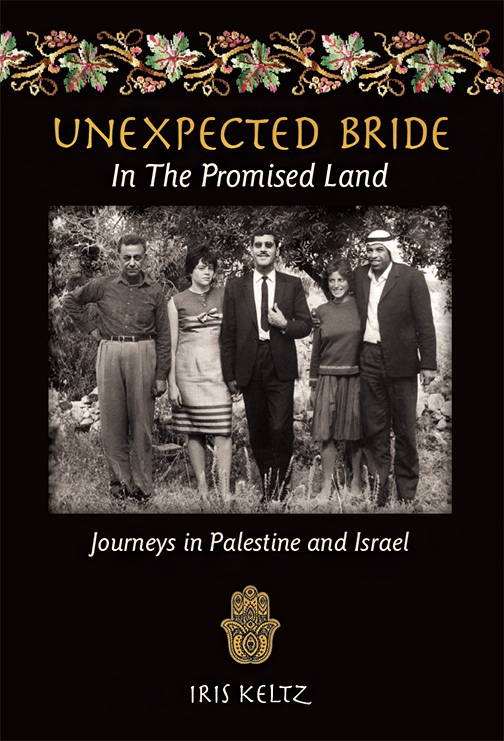
Iris Keltz was raised in NYC on the Jewish narrative of suffering in a thousand-year Diaspora. She recently retired from a forty-year teaching career that began in Harlem, NY. Her first book, Scrapbook of a Taos Hippie (2000, Cinco Puntos Press) is an award-winning memoir documenting the counterculture in Northern New Mexico, where she has lived since the early seventies. Keltz’s articles, op-eds, and essays have appeared in print and electronic media. She has spoken in universities, synagogues, churches, high schools, and civic centers, and has represented her district in a national Tikkun lobby. A member of Jewish Voice for Peace, Keltz has spent decades working to support human rights for Palestinians.

Unexpected Bride in the Promised Land

After hitchhiking from Paris to Jerusalem, Jordan in 1967, Iris Keltz had to wait three days for permission to cross a U.N. checkpoint into Jerusalem, Israel. That was enough time for this young Jewish woman from New York to meet a Palestinian poet, musician, and world traveler. After a whirlwind courtship of less than three weeks, they married and were planning their honeymoon when the Six Day War broke out. The day Israeli soldiers barged into the basement apartment where the newlyweds had found sanctuary with other Palestinians, Iris was frozen with fear. She meant to cry out, “I’m Jewish, American and these are my friends.” Her silence that day compelled her to write this book.

David Perez

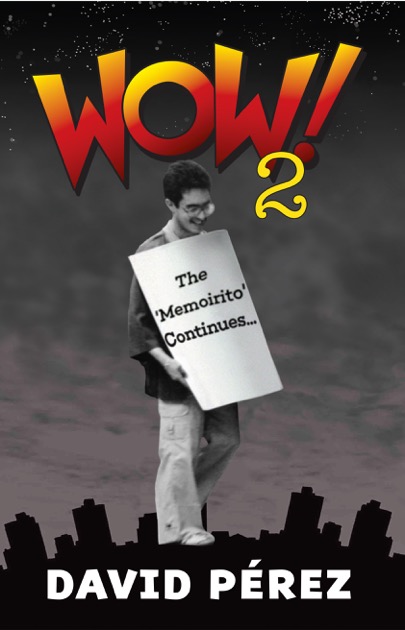
David Pérez is a writer, editor, journalist and actor born and bred in the South Bronx. A long-time political activist with hundreds of published articles and essays, he has also contributed to New Mexico Magazine and The Taos News. An active performer in community theatre, David is married to poet Veronica Golos, and is the father of two adult children, Belinda and Jase.

Wow! 2

In “WOW 2: The Memoirito Continues,” David is in high school, a top student and athlete. But as the tumultuous 70’s set in, David is pulled by partying and getting high, until a brush with the law and pigeons in his South Bronx neighborhood forces him to re-think his priorities.


David writes his first short story, learns about Marxism via the economics of his shirt, graduates, and ends up becoming a young father, a detour that leads him to join the U.S. Navy. Ten months later, David is back in New York, where he becomes a radical political activist, and is schooled in the “university” known as the mailroom. The book ends with David and his friends back in the South Bronx, sharing lives linked by culture, neighborhood, work, family, and a commitment to revolutionary change.


Full of the author’s trademark use of humor and sharp dialogue, WOW 2 is another addition to the multilayered Latino experience, a book that entertains, educates, and enlightens, with timely lessons about what “being smart” really means.


Larry Schreiber, M.D.

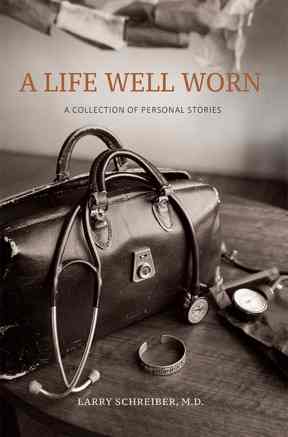
Larry Schreiber, M.D., lived in northern New Mexico and practiced medicine there for 43 years. He was the proud father of 14 children, ten of them adopted from around the world. He was married to poet, Catherine Strisik. For 20 years he served as medical director of Mountain Home Hospice of Taos. In 1980, Dr. Schreiber was a medical team leader for the international committee of the Red Cross on the Thai-Cambodian border. He was the co-founder of Child-Rite which operated for 20 years and placed 240 special needs children in New Mexico homes at no cost to the families. Dr. Schreiber spent the last three years of his life writing A Life Well Worn, a collection of autobiographical stories about children growing up (and down), his experiences in the Indian Health Services, memories of working in a war zone, and thoughts of caring for the dying in a rural community. He passed away in January of 2016, shortly after completing this book.

A Life Well Worn

Larry Schreiber’s life story is a love poem to Northern New Mexico and to all its inhabitants, as well as to Larry’s own children—so many of them adopted—and to his wife and friends and colleagues. I think this book is beautiful. I am moved to say that A Life Well Worn is among the most humane and decent books I have read in a long time. The life it covers is truly ‘well worn’ and also one lived to the hilt. Sometimes the essays deal with tragedy—yet they are also filled with joy, humor, and the awe of being alive. They are enriched by Larry’s commitment to healing, to unselfishness, to embracing without fear the complexity of existence, and always with the humor that is at the heart of his survival, of our survival as a species.

— JOHN NICHOLS, Taos Resident and Author of The Milagro Beanfield War and The Sterile Cuckoo

Robert (Reg) Strickland

Dr. Strickland is currently an Emeritus Professor at the University of New Mexico Health Sciences Center. He was born in Adelaide, South Australia, graduating in Medicine from the University of Adelaide in 1961. He trained as a Physician (Internist) at the Queen Elizabeth Hospital in Adelaide, and became a Fellow of the Royal Australasian College of Physicians in 1965.
Following training in clinical Gastroenterology and research in Immunology at Stanford University, California and the Walter and Eliza Hall Institute of Medical Research in Melbourne, Dr. Strickland was recruited to the University of New Mexico to build the first Academic Gastroenterology Division in the Department of Medicine.
He became Chairman of Internal Medicine in 1988 after 15 years of successful development of the Gastroenterology Division. In partial retirement since 2001 he continues to teach clinical Gastroenterology to students, residents, and Fellows and completed a successful period as Governor of the New Mexico Chapter, American College of Physicians 2003–2007.

Journey Down A Road Less Traveled

This biography encompasses the life and career of an Australian physician who at 36 years of age sought to succeed in the competitive world of Academic Medicine in America. We learn about the challenges he has faced along the way from being a young medical student who failed his first year of Medicine in the 1950s to his building a large Department of Medicine at the University of New Mexico Health Sciences Center in the chaotic times of the 1990s. In describing his now over 50 year experience in Medicine, the remarkable changes that have occurred along with the challenges remaining are well portrayed. 

Martha Grossman

Martha worked on her story for over ten years, picking up the pieces of her life, attempting to figure out its puzzle. She lives in the protective shadow of Taos Mountain, alone, in the same house in which she began life as a single girl. She enjoys yoga, acting, and playing piano.

Coming of Age

Coming of Age: Come Rain or Come Shine took more than ten years to write. The author, finding herself alone, her marriage of forty-two years imploding, examines each piece of her life to understand what happened to her. She “comes of age” as a senior, finding her voice to tell her story as truthfully as she can. She discovers who she is and transforms herself in the process. Others present in the story may view it differently, with varied colors and threads. This is only the author’s version of the fabric of her life.

Bill Whaley

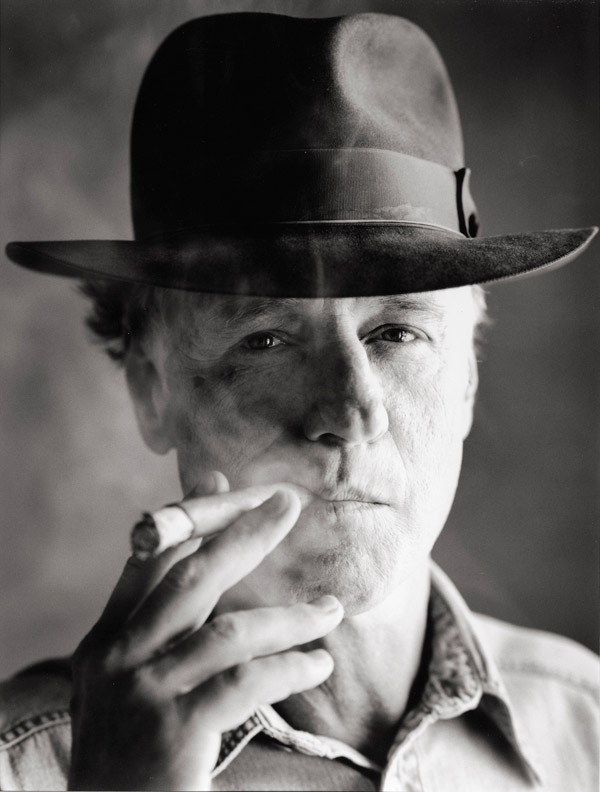
Bill Whaley, the author of Gringo Lessons: Twenty Years of Terror in Taos, has pursued adventure as an entrepreneur and journalist in El Norte for almost fifty years. Recently, he edited Paul O’Connor’s prize-winning photography book, Taos Portraits. Bill teaches courses in literature, philosophy, and writing for the University of New Mexico’s Upper Division Bachelor and Graduate program in Taos. He published a monthly journal about art and culture, Horse Fly, from 1999 to 2009. For his devotion to the local cultura and other stimulating challenges, the so-called Bad Gringo has endured financial failure and suffered the slings and errors of political and prosecutorial misconduct while being memorialized as a figure in a Day of the Dead tableau. If his application to a witness protection plan is accepted, he promises to write a sequel called Taos Redux: The Horse Fly Years, a terrifying comedy of political revenge and retaliation about a pesky insect, called La Mosca.
 

Photo by Kent Barker.

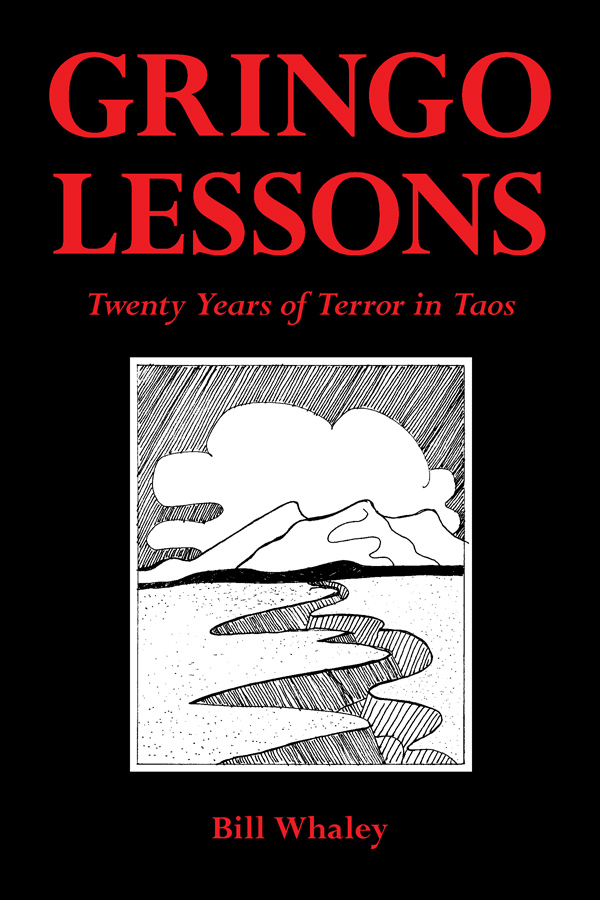
Gringo Lessons

Gringo Lessons: Twenty Years of Terror in Taos is a tale of modern adventure about a young man who experienced the local culture from 1966 to 1987. There he met the community: skiers, La Gente, los vato locos, Chicano activists and their Spanish contemporaries, the artists, drug dealers, fellow soldiers, tempting sirens, the occasional movie star, and a host of con artists. Finally the fool abandoned Taos and returned to university only to return and publish Horse Fly, a monthly journal about politics and art for another decade, which he promises to chronicle in a sequel: Taos Redux: The Horse Fly Years.

“This wonderful autobiography is as honest as the day is long, no holds barred, no punches pulled. It’s beautifully written, highly entertaining, truly wild and wonderful even as it also may make you cringe on every other page.”
—John Nichols, New Mexico author

Christine Sherwood

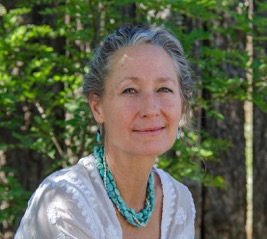
Christine Sherwood, born in Wisconsin in 1957, moved to the mountains of Northern New Mexico in 1977. Christine graduated from massage school in 1991 and in 1995, began her teaching career in the healing arts. She created her own CEU class for massage therapists, “Bones of the Earth”, which she taught nationwide for nine years.

In 2006, Christine was diagnosed with rectal cancer. She integrated her ayurvedic lifestyle and holistic healing arts with the chemo, radiation and surgeries.

Cancer is a catalyst for change.  As Christine Sherwood opened to her experience with cancer, the gift of writing emerged—first as poetry in her self-published collection, Help Me Remember Who I Am, and later through the poetic prose of Fire and Ash: The Alchemy of Cancer.

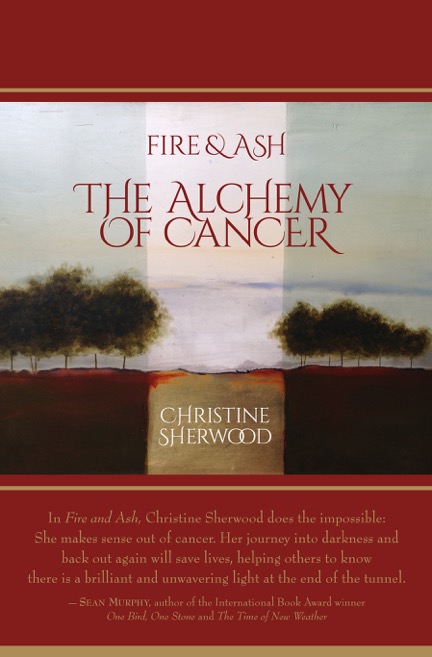
Fire and Ash: The Alchemy of Cancer

This is a timeless, archetypal tale of going into the realm of death, into the grave, and resurrecting into a new, burnished life. Like The Pilgrim’s Progress and Dante’s Divine Comedy, Fire & Ash reminds us that each soul is called to return to God, and the path chosen is as individual as each one of us. Anyone who has had cancer, or been close to someone with cancer, will resonate with this powerful, truthful account of Christine Sherwood’s odyssey, from the depths of suffering to the highest spiritual realms of love, forgiveness, and compassion. If readers will allow it, this book will bring them to a depth of feeling and an expansion of their compassion they didn’t know they possessed.

In Fire and Ash, Christine Sherwood does the impossible: She makes sense out of cancer. Her journey into darkness and back out again will save lives, helping others to know there is a brilliant and unwavering light at the end of the tunnel.

— Sean Murphy, author of the International Book Award
winner One Bird, One Stone and The Time of New Weather

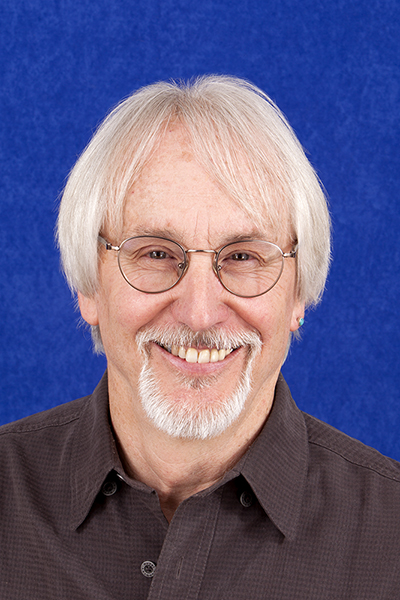
Steve Fox

Steve Fox was born in Washington, D.C. to two University of Maryland students—his dad a student in his grad student mom’s Spanish class. They moved to Texas where Steve attended public schools. Steve’s higher education was interrupted by the draft for the Vietnam War. His first book is Toxic Work: Women Workers at GTE-Lenkurt (Temple U. Press). He is a journalist, photographer, and has taught American Studies at the University of New Mexico and as a Fulbright Lecturer at the Universities of Frankfurt and Hamburg, Germany.

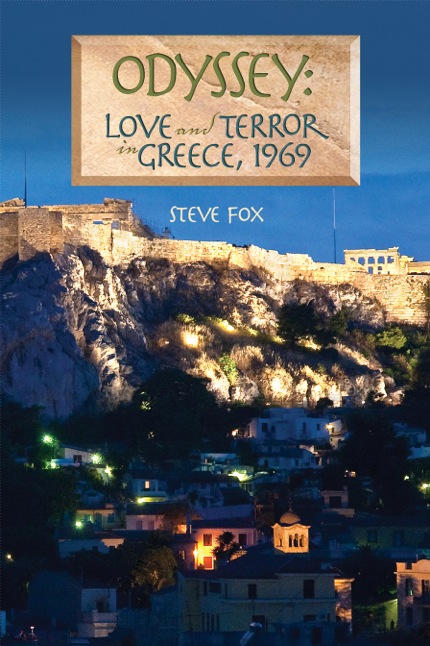
Odyssey

Steve Fox had just started his second semester of graduate English study at the University of Texas in January, 1967, when he was drafted to serve in the voracious Vietnam War. But Fox, 23, kept his eyes open and learned how to adapt, resist, and avoid the war in Asia with timely help from a string of angels he meets. He got himself assigned to Athens Air Base in Athens, Greece, where Greek and American friends reveal the terrors of the dictators—known as The Colonels—running the country. In 1969 an ex-Greenwich Village folksinger and Steve’s mentor in Athens, Allan Wenger, makes Steve part of the Greek Resistance to the Colonels. Steve and his smart and sassy American girlfriend drink deep of Greek ruins and lore, set a headlong course of self-reinvention as they return to the U.S. and Mexico, and explore the tangled path of love in revolutionary times.

John Nichols, author of The Sterile Cuckoo, The Milagro Beanfield War, The Magic Journey, The Nirvana Blues, and major  (uncredited ) work on the screenplay of the Costa Gavras movie Missing

“Steve Fox’s rousing memoir, ODYSSEY: Love and Terror in Greece, 1969, is part high drama, part fumbling comedy, sort of like Austin Powers meets Z, a Costa-Gavras political thriller about the rightwing military coup in Athens. The book is a great page turner, a fast-paced yarn with no yawns and written with a fine combination of innocence and moxie. There’s plenty of intrigue, both of the salacious kind and of the military junta sort, surrounded by enough confusion and danger to make any twenty-four-year-old lieutenant in the U.S. Air Force think twice. Steve was that Air Force lieutenant, and we are fortunate that he didn’t think twice . . .and lived to tell the tale. His writing is sleek, humorous, engrossing. In the background Kazantzakis, Lawrence Durrell, and the poet Cavafy keep a sly watch over the American hijinks, occasionally cracking a smile. If you like your ouzo straight up, you will really enjoy this book. Melina Mercouri would have loved it!”

Love on the Brink of History

NOW AVAILABLE

At the age of forty, Ethel, who grew up in Los Angeles, California, decided to take possession of her true name, Hannah—the name on her Israeli birth certificate. To make a little ceremony of it, she asked the bishop of an esoteric storefront Gnostic church in Hollywood to baptize her. Without preconception or preparation, she found herself pulled into a world of early Christian myths and symbols. The “dreamtime” world that engulfed her after this baptism became her guidance, as marriage and family disintegrated. As Hannah, she was drawn up through church sacraments from a suburban life she’d never wanted to live, through a mystical initiation she never asked for, which culminated in ordination to the Gnostic priesthood. But that attainment was not the conclusion. Hannah Rappaport’s memoir of this journey is mystical and pragmatic, heartbreaking and healing.

“I am mesmerized by Hannah’s story.  When a Jewish woman can be utterly transformed by her encounter with an ancient Christian Wisdom Way, and still honor her roots, there is hope for peace on earth.  Hannah Rappaport is a living example of the power of the interspiritual life.  Highly recommended.”    Mirabai Starr, Author of GOD OF LOVE: A Guide to the Heart of Judaism, Christianity & Islam

“Hannah Rappaport’s uniquely beautiful and accomplished tale of spiritual transformation will serve as guidance and inspiration for those who hear the call of the transcendent in their own lives.”  Sean Murphy, Author of: Hope Valley Hubcap King, Time of New Weather, The Finished Man, One Bird One Stone


Hannah Rappaport

Hannah Rappaport is a lifelong independent learner whose experience is, “when the student is ready, the teacher will come.”  She sees her life as a verb rather than a noun.  She has designed clothing, practiced Trager bodywork, taiji and jigong, made pottery and sculpture, bore two children, married and divorced, said mass as a Gnostic Priestess, and more. Remembering and performing her soul’s purpose in life is her purpose in life. She is a spiritual counselor and lives alone in Northern New Mexico.

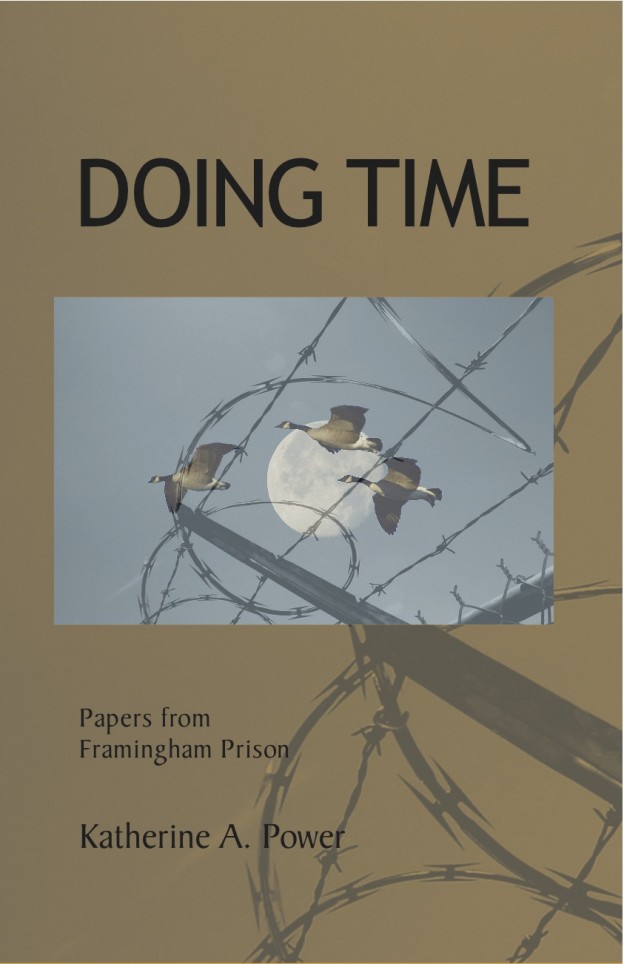
Doing Time

I didn’t set out to be a terrorist. As a student activist, I moved from ­protesting the war in Vietnam to waging guerrilla warfare to overthrow the government. A bank robbery we undertook to finance this “revolution” resulted in the murder of Boston police officer Walter Schroeder. I fled and lived as a fugitive for 23 years. In 1993 I surrendered to ­authorities, pled guilty to armed robbery and manslaughter, and served six years in prison.

I haven’t given up on social change. The more I have studied how things change, the more I see that the acts of this moment are hugely powerful, that peace in the moment is the way to peace in the world. This book is one way for me to share some of what I have learned.

— Katherine Ann Power

Watch for Katherine’s forthcoming memoir, Surrender, lessons from her dramatic journey from guerrilla warrior toward practical peace.

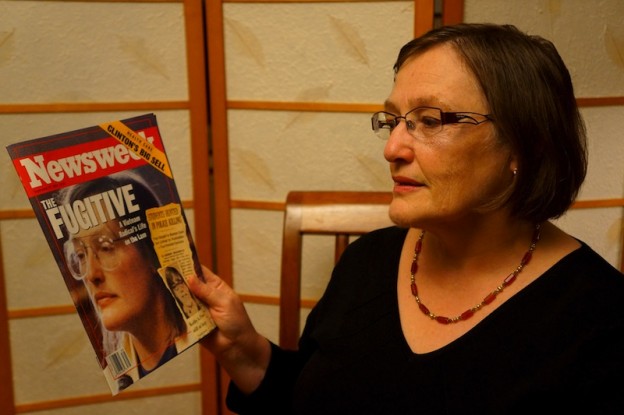
Katherine Ann Power

Katherine Ann Power, a native of Denver, evolved from student activist against the Vietnam War to guerrilla warrior, to fugitive on the FBI Most Wanted list, to prisoner, penitent and now practical peace catalyst.  Power was the getaway driver for a bank robbery gone bad in 1970. A student protester at Brandeis University, she joined a group willing to take radical action against the Vietnam War. But things went wrong when an Irish policeman and father of nine was shot and killed during the robbery.  She fled, living underground for 23 years, before her surrender in 1993.  Power served six years in Framingham Prison (Framingham, Massachusetts) and has just completed 20 years of probation.


How to Make an African Quilt

How do we sew together the hoped-for future and the unfortunate past, the bright as well as the darker patches of our lives? How do we stitch cultural differences, join disparate worlds, to create something both beautiful and useful? Bonnie Lee Black subtly addresses these universal questions through vivid stories of her life-changing experience living and working in the fabled city of Ségou, Mali, in West Africa, after having served for two years in the Peace Corps in Gabon.

At the request of a talented group of Malian seamstresses, Black taught them the craft of American patchwork quilting and spearheaded an independent economic-development effort called the Patchwork Project. She has now created a many-layered patchwork quilt of a book that brings that time and place — and all its colorful characters — to life on the page.

Threaded throughout is the fictional narrative of Jeneba, a slave-quilter in the antebellum American South who had been kidnapped from the Kingdom of Ségou as a child, as well as the real voices of the Malian women who took part in the Patchwork Project.

How to Cook a Crocodile

How to Cook a Crocodile

Casting  caution to the wind at the age of fifty, New York caterer and food writer Bonnie Lee Black decided to close her catering business and join the Peace Corps. Posted to the tiny town of Lastoursville in the thickly rainforested interior of Gabon, Central Africa, Bonnie taught health, nutrition  and cooking, in French, primarily to local African women and children. In the two years she served in Gabon, Bonnie developed her own healthy recipe for a purposeful life, made in equal measures of good food, safe shelter, meaningful work, and unexpected love. Like M.F.K. Fisher’s classic World War II book, How to Cook a Wolf, Bonnie’s true stories comprise a lively, literary, present-day survival guide.

How to Cook a Crocodile won first prize in the Charity and Community – North Africa at the Gourmand International awards ceremony held at the Folis Bergeres in Paris on March 6, 2012.