Archives

Kay Matthews

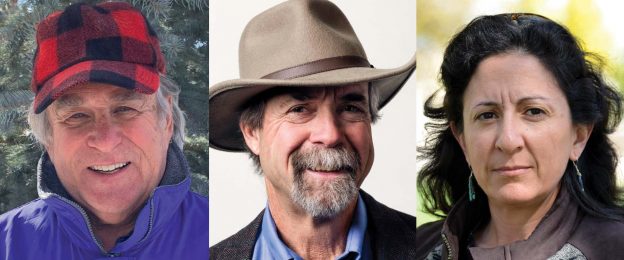
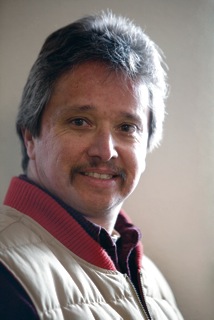
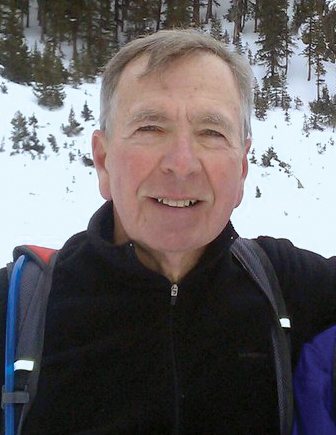
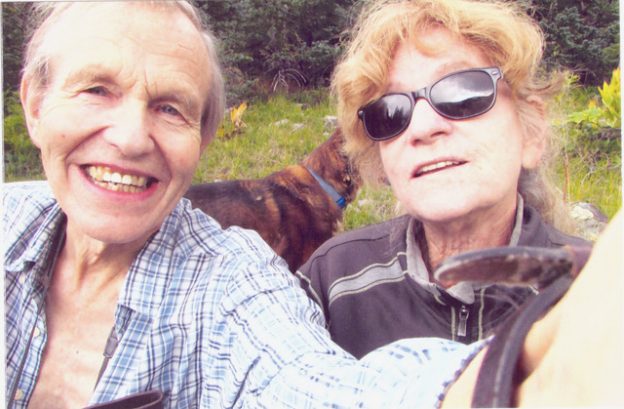
Kay Matthews (pictured with John Nichols) is the publisher of Acequia Madre Press and editor of La Jicarita, an online journal of environmental politics, based in northern New Mexico. She’s the author of numerous books: children’s; hiking, backpacking, and cross-county skiing guides; short stories; literary essays; and non-fiction critiques of environmental and social justice. She lives on a farm in El Valle where she raised two children, grows fruit, vegetables, and pasture hay, and served as an acequia commissioner.
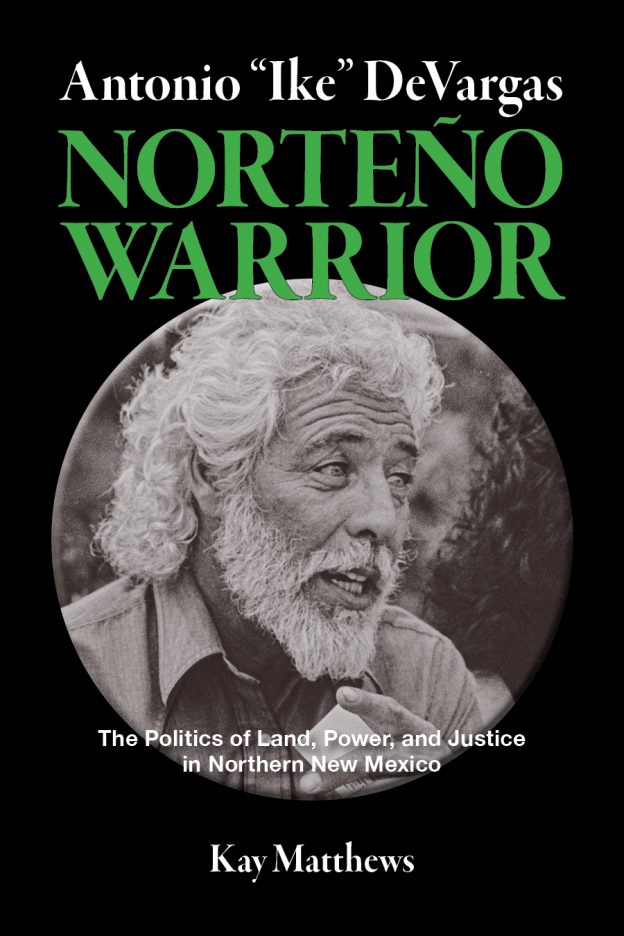
Antonio “Ike” DeVargas-Norteño Warrior

Antonio “Ike” DeVargas-Norteño Warrior is the political profile of an activist whose life was dedicated to the pursuit of environmental and social justice in northern New Mexico, a distinct regional community that has long struggled for economic viability and autonomy. A colorful man with a head of premature white curls and blue eyes, born and bred in a traditional Hispano village, Ike, as everyone knew him, came of age during the Vietnam War where he witnessed firsthand American imperialism against a developing nation. Once home, he recognized that the same forces were at work against the Hispano and Native American communities in “el norte,” under the rule of a despotic Rio Arriba County official. As a founding member of La Raza Unida Party he learned the organizing skills that would help topple a despot and prepare him for future battles: logging wars that pitted communities against corporate timber companies, the US Forest Service, and urban environmentalists; corruption and malfeasance by future county political machines; and tragedies within the criminal justice system. He was a man whose grounding in the cultural traditions of Hispano resiliency and resistance to the dominant paradigm prepared him for a life that left a lasting legacy. His story is the larger story of northern New Mexico.

Richard L. Rubin

Dr. Richard Rubin is steward of the Leopolds’ historic Tres Piedras, New Mexico home and scholar of the modern Forest Service conservation mission.


Andrew Gulliford is Professor of History at Fort Lewis College and a deeply engaged citizen of the wild.


Leeanna Torres is a Nuevomexicana environmental scientist, writer, and daughter immersed in family querencia life.

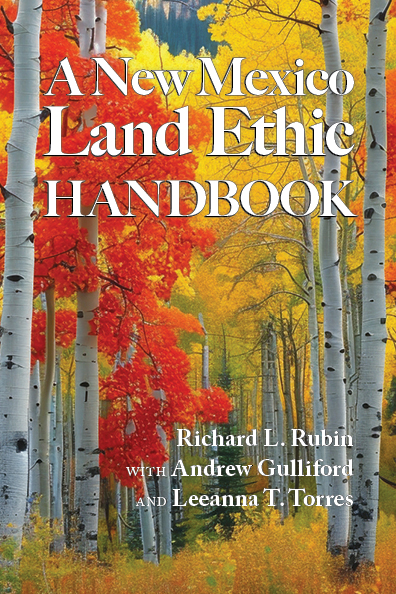
A New Mexico Land Ethic Handbook

Honoring the 75th Anniversary of Aldo Leopold’s A Sand County Almanac.


A thoughtful and practical exploration of Aldo Leopold’s Land Ethic, tracing its roots in the landscape of northern New Mexico and its ongoing relevance here in the place that first gave rise to it.

— Kristina G. Fisher, Past President, Albuquerque Wildlife Federation founded by Aldo Leopold.

Aldo Leopold’s profound Land Ethic expression culminated in the 1949 classic A Sand County Almanac. The Handbook authors describe their own meaningful experiences living land ethics now in New Mexico. We recognize the contributions of Aldo’s early work in the U.S. Forest Service and wife Estella’s New Mexico traditions. As the concept of Land Ethic evolution began here, the Handbook guides readers on appreciation opportunities now.


This informative and compelling book will speak to all people living in New Mexico who care about our land. It will enrich visitors’ experience exploring New Mexico history, culture, and ethical environmental vigor.

With contributions from Andrew Gulliford and Leeanna T. Torres

Living the Leopolds’ Mi Casita Ecology

The authors describe and illustrate experiences of Aldo and Estella Leopold’s legacy in Tres Piedras, New Mexico. As Carson National Forest Supervisor and daughter of a founding New Mexico family, they are the engaging axis to these words and pictures. This book provides a wide tour through time, places, and people, including archaeology, geology, American settlement history, U. S. Forest Service initiatives, the Leopolds’ brief presence, subsequent visitors’ contributions, modern restoration progress, current regeneration of literary and conservation scholarship, thoughts on activism psychology, insights about Leopold’s relevance now, and hopeful plans for greater community participation in this meaningful setting. Drawing on decades of Northern New Mexico engagement and several years of volunteer service as Mi Casita practical steward and conscientious student, Richard shares past and present wisdom he has gleaned from ecological scientists and teachers. Annette provides visual enhancements of the relationships that create true living in this story.

Homescape Rewilding

Annette and Richard provide inspiration in this book about their retirement pursuit of Rewilding practices for ecological service. In raconteur style, they describe their Taos, New Mexico Homescape cultures and cultivation. Beginning with thoughtful overview of Rewilding philosophy, they take the reader through millennia of people on the land, relationships with trees, horticulture and husbandry, fauna community, culinary wilding, and contemplative initiatives. While their setting and cultural environment are local, they are inspired by profound writers and diverse teachers. This book’s sources and themes address experiences and endeavors for applying the principles of Rewilding anywhere.

Oikos: Ecology of Northern New Mexico

Oikos: Ecology of Northern New Mexico is the fruit of the author’s nearly three decades of wildlife service in New Mexico, Colorado, Arizona, Oregon, Minnesota, and Wisconsin. In it, Steve Tapia—nature columnist for The Taos News and veteran wildlife biologist with the U.S. Fish & Wildlife and the U.S. Forest Services—shares his knowledge, wit, and experience of local ecology. Ecology studies the relations of living things to their environments and to each other. This book explores the wildlife, botany, landscapes, and ecosystems of Taos and Northern New Mexico.
The author’s frequent refrain: “Ain’t nature grand?!” sums up Steve’s awe and reverence for our home, Earth, and his hometown of Taos. Reading Oikos: Ecology of Northern New Mexico, you cannot fail to be moved by the grandeur of nature and its workings. You may be inspired to become a better steward of the home we share with so many species—animal and plant. Before you know it, you might catch the ecology-buzz, too, and find yourself whistling, “Ain’t nature grand?!”

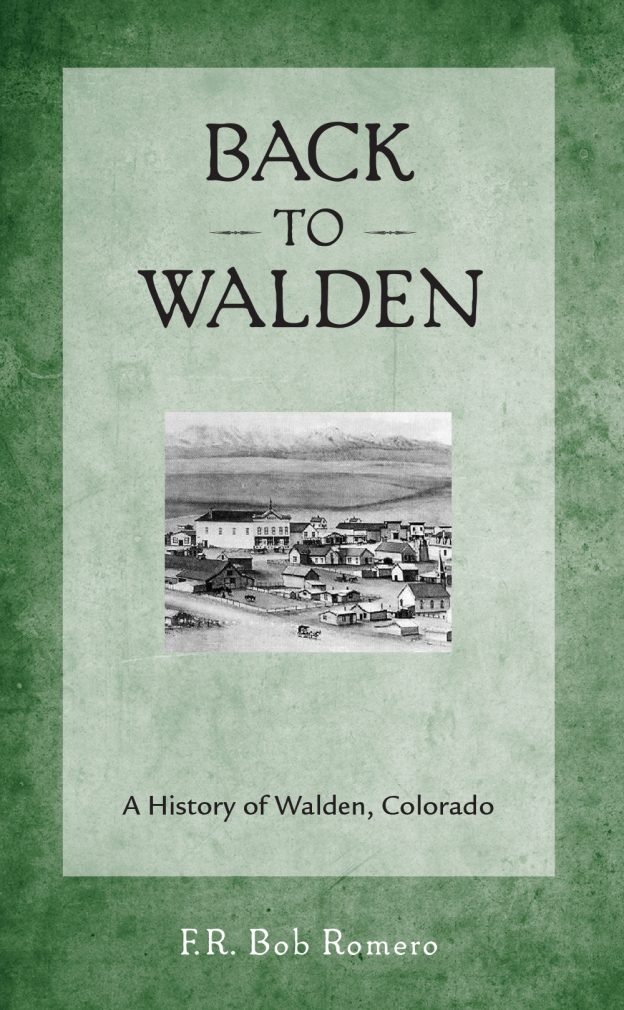
Back to Walden

This short book about the history of Walden, Colorado, chronicles a typical history of a rural community but is still a very different story of small-town Americana. Back to Walden is an important addition to the bibliographical list of books covering the unique history of Colorado.

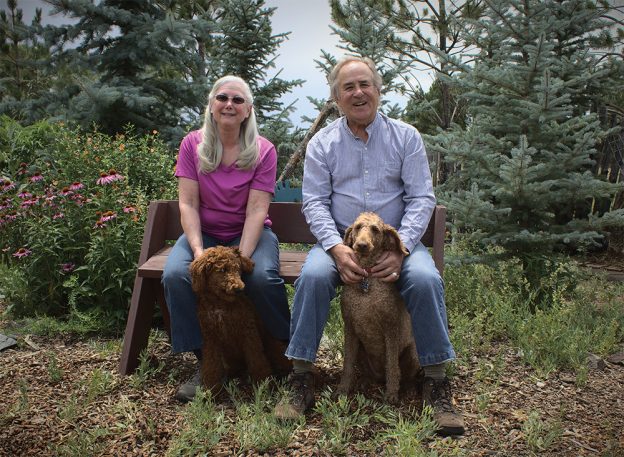
Richard and Annette Rubin

Richard’s lifelong descriptive writing began with a college dual major in English and Biology, and a medical career ranging from Southwestern community health initiatives to Developmental Disability practice, teaching, and research. Annette’s career began with a Psychology major, then pro- gressed to degrees in School Counseling, Elementary Educa- tion, Special Education, and Gifted Education. Beyond their professions, the authors describe their meaningful life experiences with ecological values in their newest book’s stories.This book is a sequel to our works of craft, community, and philanthropy.

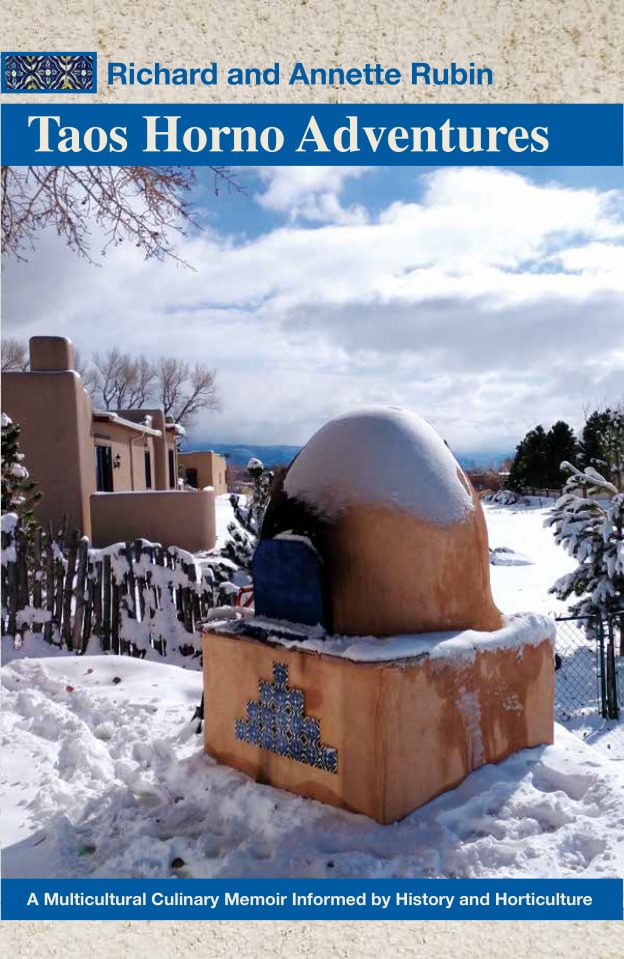
Taos Horno Adventures

From the view of a retired physician and educator spouse, we share many life stories from over fifty years’ experience with the diverse cultures of Taos, living the shared cultures rather than just observing.

The organizing theme is our new horno beehive oven that has enabled us to engage in new and old cultural practices. Extensive research and the participation of dozens of people yielded description of 90 recipes that combine home grown produce, community sourced ingredients, and horno influence.

Each recipe has been done by us recently, and the results are described. The twelve chapters discuss horno  anthropology, our modern creation, elk and pumpkin harvesting, off the hoof meats, sourdough creations, smoking fish, baking with local rye, Pueblo blue corn cultivation, diverse culture breads, various fowl feasts, multiple gifts from the garden, ancient beehive oven recipes, and local fruit delights. Thirty-four photos, a Recipe Index, and nineteen References are included.

The book and proceeds are dedicated to the multicultural mission of the Millicent Rogers Museum. It is a work of craft, community, and philanthropy.

Sweet Tarts for my Sweethearts

For Bonnie Lee Black, writing and cooking have always been analogous. Both involve the thoughtful and loving preparation of something good for another’s consumption. This cookbook is a compilation of some of the author’s favorite, tried-and-true sweet tart recipes, along with related stories, drawn from her twenty-year culinary career. Her message to readers is simple: “I hope that Sweet Tarts will inspire you to make one or two–or more—of these recipes from time to time, especially on special occasions and enjoy them with your own sweethearts.”

Loretta Ortiz y Pino

Dr. Loretta Ortiz y Pino (1954-2017) was a Stanford-educated pediatrician who dedicated her life to caring for the children of Northern New Mexico, from the Navajo Nation to Taos. Born and raised in Santa Fe, she came from a long line of explorers, politicians, teachers, herbalists, and curanderos. She trained as a curandera for ten years, was a certified medical hypnotherapist, and advocated for integrative medicine in Taos.

The Visits

Dr. Loretta Ortiz y Pino, a beloved small-town pediatrician, was asleep one night when she awoke with a sense of intolerable restlessness. The voice of a friend who had recently died insisted, “You write, and I’ll talk.” She picked up pen and paper and began writing, in the dark, the words her friend spoke to her. This was the first of more than two hundred “visits” Loretta received spanning nearly two decades from guides known and unknown. Faced with terminal cancer in 2016, Loretta enlisted her loved ones to publish this selection of visits. In each one, the different entities convey similar messages: life is an ephemeral gift, constrained by illusion, and our truest task here is to love unconditionally; the afterlife is beautiful, filled with peace and insight; and death is nothing to fear.

Authored by Loretta Ortiz y Pino, this book is edited by Kat Duff.

“Dr. Ortiz y Pino joins a stream of beings who throughout time have been selected to serve as a conduit for sacred wisdom—a wisdom both perennial and precise.”                 —Mirabai Starr

Margaret W. Lamb

Margaret Lamb has been flying the mountains for decades, first in her 85-hp Luscombe, and then for 36 years in two Navions, and some air-taxi Cessnas. She holds instrument-rated commercial pilot, CFII and advanced, instrument ground instructor ratings. She has published extensively in magazines such as IFR Refresher, Aviation Safety, Professional Pilot, AOPA PILOT and FLYING, and has been co-author in a number of scientific studies published in peer-reviewed periodicals, such as Aviation, Space and Environmental Medicine. Her passion is mountain flying and meteorology. She owned the Navion shown as her portrait for 32 years.

(Photo by Stephan Wilkinson)


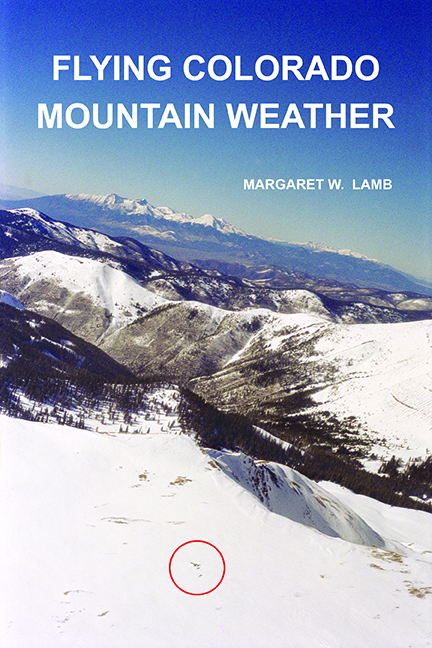
Flying Colorado Mountain Weather

This seminal book highlights reading clouds and flying mountain weather. It’s a stick and rudder text, including full color photographs printed to art-quality standards. The material explains airplane crashes in all sorts of downdrafts, from lee-side downdrafts in the mountain wave, to windward side flows across the Continental Divide. Microscale weather is a problem not identified at all in general aviation mountain flying, but this book exposes the hazards. The book also contains chapters on flying turbulence, and risk (with examples from mountaineering, as well as paragraphs from famous pilots). 6×9 inches; 176 pages on 80# stock with laminated 100# color covers.

COMMENTS FROM READERS:

“The challenge of flying near the edge and the sweet reward of Colorado mountain flying is beautifully presented. You’ve succeeded in filling a large void in pilot knowledge.” (Colorado)

“I especially like your front and back covers, where you use them for instruction, not wasting any pages! Very unusual and creative!” (Wisconsin)

“The illustrations are out of this world, just great!” (New Mexico)

“My favorite pages are your paean to air (“wind is your friend”). This book is an instruction manual, yet it ends up being a song.” (Colorado)


Steve Tapia

Steve Tapia describes himself as a small-town boy from Taos, New Mexico. Graduating from NMSU with a Bachelor’s of Science Degree in Wildlife Science in 1987, he began his 27-year wildlife career with the U.S. Fish and Wildlife Service as a Cooperative Education student in Princeton, Minnesota working as a Refuge Manager Trainee. The next work phase was as a manager in Trempeauleau, Wisconsin, and then to Yuma, Arizona. After that, his service to wildlife took him to the U.S. Forest Service in the Wallowa Valley, Hells Canyon, and Eagle Cap Wilderness Areas in Oregon; then on to 17 years in the Pikes Peak Ranger District of Colorado Springs; and lastly Flagstaff, Arizona. Those years were the toughest job he ever loved. He retired from government service in 2010. Now, back in his home town, he writes a weekly column about nature for The Taos News.

Steve’s motto is “do what you love, and you’ll never work a day in your life”!

Teaching people about wildlife and nature is in “in my blood.” That is the reason for De La Tierra: The Natural World of Northern New Mexico. I truly hope you will enjoy the book! — Steve

De La Tierra

De La Tierra: The Natural World of Northern New Mexico is a fact-filled guide to the wildlife, plants, and unique habitats of Northern New Mexico. Written by Steve Tapia, a retired U.S. Fish and Wildlife employee, De La Tierra is full of good-natured humor and wit.

Cindy Brown

Author Cindy Brown has been the hiking columnist for The Taos News for the past four years. She is the author of trail guides for bed and breakfasts and wrote a section on hiking tips for visitors in the final edition of Kay Matthew’s book Day Hikes in the Taos Area. Brown is also the author of Lessons from Nature in healing, strength, and flexibility (White Sand Lake Press, 2003). Her business, Two Meadows Coaching, helps people connect with nature during major life transitions.

Taos Hiking Guide

Written by Cindy Brown, hiking columnist for The Taos News, this all new Taos Hiking Guide has the most up to date information on 31 of the best trails near Taos. Full color detailed maps were created especially for the book by expert map makers Dharma Maps, using GPS data gathered by author Cindy Brown. The book has color photos illustrating hikes down to the Rio Grande and up into the Sangre de Cristo Mountains, as well as information on full moon hiking and a guide to wildflowers.

From the descriptions, you will get a sense of which hikes you will like most and which ones are best in spring, summer, fall and winter. Hikes for beginners and experts are described, including the trail to Wheeler Peak, the highest mountain in New Mexico. Complete introduction includes tips on equipment, clothing, and staying safe on the trail.

Light weight and easy to carry in your backpack.  The book includes:
–Table of hikes with distances and elevations
–Detailed maps by Dharma Maps
– regional map and one for each hike
–Photos and descriptions of wildflowers
– how to spot animals and how to stay safe when you see them
–Easy to follow directions to trailheads

Publisher Rebecca Lenzini says “Finally! An up-to-date hiking guide for all of here in Taos! This is a true must-have book for every home and visitor to our beautiful part of New Mexico. Already readers are saying that the details inside the book, including directions to the trailheads as well as distances and trail conditions, are the most accurate they have ever encountered. Plus the book is just plain beautiful. Nighthawk Press is proud to have helped to make the book come to life.”

Alexis Rykken

Alexis Rykken has lived in remote areas of the Southwest for most of her adult life, captivated by wild lands, nourished by the mystery and grit of untamed country. She holds a master of education degree and works as a writer, ecologist, and educator. Alex designed and implemented “Mapping the Río,” an interdisciplinary field study of the Río Grande Watershed, and produced a DVD featuring the Río Grande. She also partnered with a San Antonio Elementary School fifth-grade class to publish a field guide featuring the Bosque del Apache National Wildlife Refuge in southern New Mexico and has worked as a volunteer with Mission:Wolf. Thinking Wilderness selected Alex as a “featured wilderness thinker” in 2014. Of her love affair with wilderness, Alex writes, “It is here I feel connected — hand, foot, and heart — to my inner spirit, to Earth’s dream, to my own dream for Earth.”

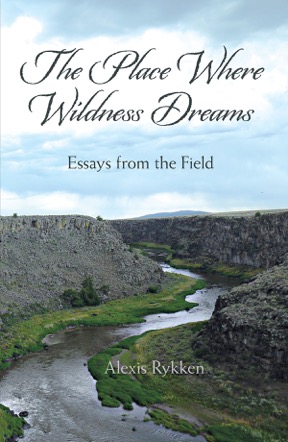
The Place Where Wildness Dreams

The Place Where Wildness Dreams enters Earth’s dream, offers a new sensibility of who we are as part of an integral community, and opens our minds to the consciousness of the natural world.

All the world is here — from Bear to Rabbit, from Jaguar to Pica, from Mountain to Valley. The beings of the desert, the prairie, the forests and skies all reside with us, in a place that is both “out there” and within. The distant is brought near. And that which is too close to see is made visible. As a reader, you join the author’s innate sense of journey…and you find in your own gypsy soul that this journey is not one you are just starting, nor will it end with the final page.


Blurbs


“We are honored to include Alexis as a featured thinker in residence in the Thinking Wilderness Project, and invite you to travel, through her words, into the wilds of your imagination and then perhaps into wilderness itself.”

—Anita McKeown & Claire Coté, Creative Directors,
Thinking Wilderness Project LEAP
(Land, Experience and Art of Place), www.leapsite.org

Tributes & Tirades: Taos Life and American Politics

Tributes and Tirades: Taos Life and American Politics is a collection of commentaries and opinions on events in a troubled period in American politics and life in Taos, a storied northern New Mexico town. Some of the essays are revisions of previously published Op-Ed or literary-anthology pieces. Others appear in print for the first time. Author Robert J. Silver, a psychologist by background and training, was captivated by Taos’s legendary transformational power. These collected writings are the result of the magic that is Taos.

Robert J. Silver

Psychologist by background and training, storyteller by nature, Parkinson’s patient by chance, Robert Silver grew up in a gritty part of New York City, which probably predisposed him not to give in or give up. From the Bronx High School of Science (1960) to the City College of New York (B.A., 1965, Psychology), and to Indiana University (Ph.D., 1972, Psychology), his educational path carried him far from his Bronx beginnings. Retired after 45 years of clinical and forensic-psychology practice, consulting, and university teaching, he is now immersed in writing. Taos, New Mexico—a small, isolated, mountain town—is home for him and his wife, abstract painter Dianne Frost. Silver’s creative nonfiction has been published in Chokecherries, Howl, Storied Recipes, and Storied Wheels—Taos-inspired anthologies that express the quirky creativity of this magical place that some call “the soul of the Southwest.” Tributes & Tirades: Taos Life and American Politics (Nighthawk Press, 2013) is a collection of Silver’s social and political commentaries.

Storied Recipes

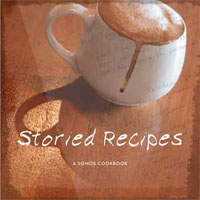
SOMOS, a Taos non-profit organization known as the literary heart of Taos, has created Storied Recipes—an attractive 200-page cookbook that features 84 short stories with accompanying recipes submitted by friends of SOMOS.

Storied Recipes Editor, Bonnie Lee Black, writes in the foreword, “Cookbooks are storybooks for grownups. Acting on this theory, we’ve compiled a perfect bound cookbook filled with short, true, well-crafted stories—and the recipes that flavor them –as a fundraiser for SOMOS, Taos’s own literary nonprofit organization.  We cast a wide net in our call for submissions and were delighted with our catch. Taos, after all, is a town teeming with creative types; so fishing for creative taken here is particularly effortless.  Just put the word out, and reel the responses in.  Our Stories Recipes, then, is a showcase for the talents of the many friends of SOMOS—storytellers of all stripes who love to cook as well as eat.”

According to Black, stories poured in from men and women, young and old; poets, playwrights, novelists, biographers, memoirists, and all the rest; lifetime Taoseños and more recent arrivals.  And the stories themselves, some funny, some poignant and nostalgic, span the globe—from London to Venice, from Africa to Qatar, from Greece to New Zealand (with a dollop of Italy in between).

Featured on the back cover of the book are quotes by Natalie Goldberg (author of twelve books, including Writing Down the Bones) and John Nichols (author of twenty-one books, including The Milagro Beanfield War).

“Cooking is close to magic, and Storied Recipes evokes adventure and culinary surprise through narrative.  These recipes are diverse, funky, historical, and sophisticated.  Keep this book by your bedside, take it into your kitchen and enjoy the journey to near and faraway places.”
Natalie Goldberg

“These recipes from all over the world are more fun to make than the spaghetti sauce in Goodfellas.  You can replicate potent Arabic Coffee, nosh Italian calamari or zeppole, and gobble treats made by a Greek poet. Each writer has a story that can be gory like the night the canary died), or full of glory (like the day Emeril blessed this food to your youth).  SOMOS has mixed up a goulash that is great to read, and even more fun to eat. Buen provecho and bon appétit..  Enjoy!”
John Nichols

Proceeds from sales support SOMOS educational programs that support and nurture the literary arts, both written and spoken, honoring cultural diversity in the Southwest.

Remarkable Women of Taos

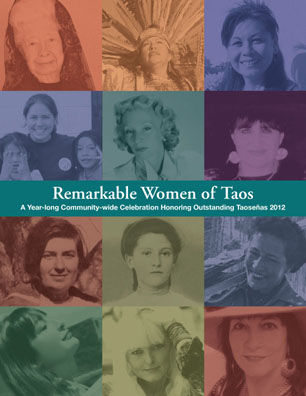
How is it that one small mountain town in northern New Mexico has succeeded in attracting and sustaining so many remarkable women over the years? This central question is at the heart of this exciting new celebratory book, The Remarkable Women of Taos.

This book is the natural outgrowth of an unprecedented year-long community celebration honoring outstanding historic and contemporary women of Taos. The 167 women portrayed here share their passions, accomplishments, and advice – as well as their stories of challenges overcome. Taken together, these narratives provide a sampling of the breadth and depth of the remarkable women who call Taos home.

From Mabel Dodge Luhan and Agnes Martin to Sherrie McGraw, Corina Santistevan and Sharon Dry Flower Reyna of today, Remarkable Women reveals the centuries-long role women have played in shaping this one-of-a-kind community.


Liz Cunningham

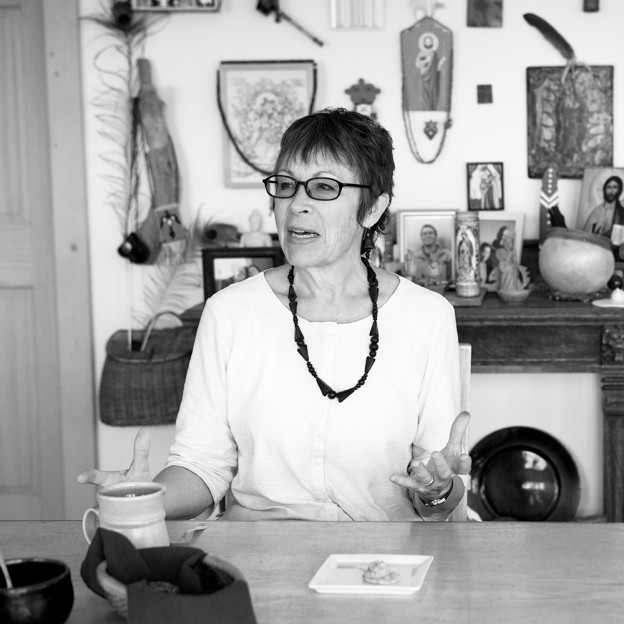
Elizabeth Cunningham has long found innovative ways to combine her passion for research and writing with her love affair with the American West. Born in Denver, Liz grew up in western Nebraska. She spent her junior year of high school in Helsinki, Finland as a Rotary Exchange Student. That experience, coupled with three years of study and work in Austria, whetted her appetite for travel.

After college Liz worked itinerant jobs. Asked about the most memorable, she replied “city weed controller in Nebraska, riding stable trail boss and wrangler in Colorado, bed and breakfast manager at an Austrian castle, Fulbright Teaching Assistant and summer tour guide in Vienna.” In 1981 she started working for The Anschutz Collection, a premier assemblage of paintings of the American West. During her fifteen years as curator, Liz devoted much of her time to traveling a selection of paintings throughout the US as well as to Helsinki, Brussels, London, Paris, Munich, Vienna, and parts of China and the former Soviet Union. Liz thought about writing “Around the World with 80 Paintings” about that experience.

Inspired by paintings of Ernest Blumenschein, her favorite member of the Taos Society of Artists, Liz began extensive research on this under-recognized American artist. Her study had unexpected results. In 1993 while lecturing on Blumenschein at a summer workshop in Taos, she met Skip Miller, then curator of the Blumenschein Home. At the end of the workshop, they and six other art historians discovered the site where the wagon wheel broke: the event that brought Blumenschein and Bert Phillips to Taos. Six months later Liz married Skip, moved to Taos, and embarked on a writing career.

Sharing her husband’s interest in Blumenschein and Taos, Liz researched and wrote about the art, culture, and people of Taos and northern New Mexico. Her published articles include the history of the Taos trade fair (co-authored with Skip) and the history of theater in Taos. Liz contributed essays to The Hand-Carved Marionettes of Gustave Baumann and to Taos Artists and Their Patrons. She edited the prize-winning Modernists in Taos from Dasburg to Martin and contributed the afterword. In 2007 Liz co-wrote In Contemporary Rhythm: The Art of Ernest L. Blumenschein. This definitive book on Blumenschein (with two essays by Skip) accompanied a major retrospective exhibition that traveled to Albuquerque, Denver and Phoenix. In 2008 it won the Western Heritage Award’s Awards’ Best Art Book and the High Plains Book Award’s Awards’ Best Non-Fiction.

Fascinated by women who founded cultural institutions, Liz researched the lives and contributions of Lucy Harwood, Mary and Helen Blumenschein, Millicent Rogers, Helene Wurlitzer, and Mabel Dodge Luhan. This led to hosting the blog “Mabel Dodge Luhan and the Remarkable Women of Taos,” which became the catalyst for the Town of Taos’ year-long recognition and celebration of remarkable Taos women. Liz dedicates her work on this project to Skip and to the memory of her mother, Bev Story, a remarkable woman who, after her death in January 2012, became a shooting star.

To keep fit mentally and physically, Liz practices yoga, and studies Svastha Yoga with Monique Parker.

by Carrie Leven

 Photo ©2012 by Kathleen Brennan