Archives

Sweet Tarts for my Sweethearts

For Bonnie Lee Black, writing and cooking have always been analogous. Both involve the thoughtful and loving preparation of something good for another’s consumption. This cookbook is a compilation of some of the author’s favorite, tried-and-true sweet tart recipes, along with related stories, drawn from her twenty-year culinary career. Her message to readers is simple: “I hope that Sweet Tarts will inspire you to make one or two–or more—of these recipes from time to time, especially on special occasions and enjoy them with your own sweethearts.”

Jamie’s Muse

The lost history of Bonnie Lee Black’s Scottish great-grandmother, Helen, has haunted the author for years. Why, as young newlyweds, did Helen and William Black leave their hometown, Kirriemuir, Angus, Scotland, and immigrate to the “dark continent” of Africa in 1882? Black’s deep spiritual connection to her ancestor has inspired her to weave a tale that is part fantasy and part history. Helen and Will died just three years after settling in Natal, South Africa, just months after the birth of their first child, Black’s grandfather, John. There is no record of their demise; no record of how their baby son ended up in an orphanage in Edinburgh, nor of how the 14-year-old boy stowed away on a ship to New York. Black lived in Africa for many years herself and writes with a sure sense of place and ­history, interwoven with the fantasy of Helen, her short life, and her imagined close friendship with Kirriemuir’s most famous son, J.M. Barrie, author of “Peter Pan.”

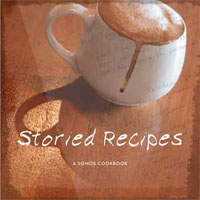
Storied Recipes

SOMOS, a Taos non-profit organization known as the literary heart of Taos, has created Storied Recipes—an attractive 200-page cookbook that features 84 short stories with accompanying recipes submitted by friends of SOMOS.

Storied Recipes Editor, Bonnie Lee Black, writes in the foreword, “Cookbooks are storybooks for grownups. Acting on this theory, we’ve compiled a perfect bound cookbook filled with short, true, well-crafted stories—and the recipes that flavor them –as a fundraiser for SOMOS, Taos’s own literary nonprofit organization.  We cast a wide net in our call for submissions and were delighted with our catch. Taos, after all, is a town teeming with creative types; so fishing for creative taken here is particularly effortless.  Just put the word out, and reel the responses in.  Our Stories Recipes, then, is a showcase for the talents of the many friends of SOMOS—storytellers of all stripes who love to cook as well as eat.”

According to Black, stories poured in from men and women, young and old; poets, playwrights, novelists, biographers, memoirists, and all the rest; lifetime Taoseños and more recent arrivals.  And the stories themselves, some funny, some poignant and nostalgic, span the globe—from London to Venice, from Africa to Qatar, from Greece to New Zealand (with a dollop of Italy in between).

Featured on the back cover of the book are quotes by Natalie Goldberg (author of twelve books, including Writing Down the Bones) and John Nichols (author of twenty-one books, including The Milagro Beanfield War).

“Cooking is close to magic, and Storied Recipes evokes adventure and culinary surprise through narrative.  These recipes are diverse, funky, historical, and sophisticated.  Keep this book by your bedside, take it into your kitchen and enjoy the journey to near and faraway places.”
Natalie Goldberg

“These recipes from all over the world are more fun to make than the spaghetti sauce in Goodfellas.  You can replicate potent Arabic Coffee, nosh Italian calamari or zeppole, and gobble treats made by a Greek poet. Each writer has a story that can be gory like the night the canary died), or full of glory (like the day Emeril blessed this food to your youth).  SOMOS has mixed up a goulash that is great to read, and even more fun to eat. Buen provecho and bon appétit..  Enjoy!”
John Nichols

Proceeds from sales support SOMOS educational programs that support and nurture the literary arts, both written and spoken, honoring cultural diversity in the Southwest.

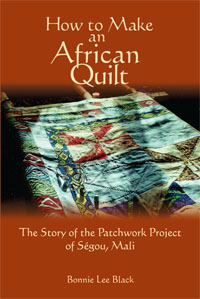
How to Make an African Quilt

How do we sew together the hoped-for future and the unfortunate past, the bright as well as the darker patches of our lives? How do we stitch cultural differences, join disparate worlds, to create something both beautiful and useful? Bonnie Lee Black subtly addresses these universal questions through vivid stories of her life-changing experience living and working in the fabled city of Ségou, Mali, in West Africa, after having served for two years in the Peace Corps in Gabon.

At the request of a talented group of Malian seamstresses, Black taught them the craft of American patchwork quilting and spearheaded an independent economic-development effort called the Patchwork Project. She has now created a many-layered patchwork quilt of a book that brings that time and place — and all its colorful characters — to life on the page.

Threaded throughout is the fictional narrative of Jeneba, a slave-quilter in the antebellum American South who had been kidnapped from the Kingdom of Ségou as a child, as well as the real voices of the Malian women who took part in the Patchwork Project.

How to Cook a Crocodile

How to Cook a Crocodile

Casting  caution to the wind at the age of fifty, New York caterer and food writer Bonnie Lee Black decided to close her catering business and join the Peace Corps. Posted to the tiny town of Lastoursville in the thickly rainforested interior of Gabon, Central Africa, Bonnie taught health, nutrition  and cooking, in French, primarily to local African women and children. In the two years she served in Gabon, Bonnie developed her own healthy recipe for a purposeful life, made in equal measures of good food, safe shelter, meaningful work, and unexpected love. Like M.F.K. Fisher’s classic World War II book, How to Cook a Wolf, Bonnie’s true stories comprise a lively, literary, present-day survival guide.

How to Cook a Crocodile won first prize in the Charity and Community – North Africa at the Gourmand International awards ceremony held at the Folis Bergeres in Paris on March 6, 2012.

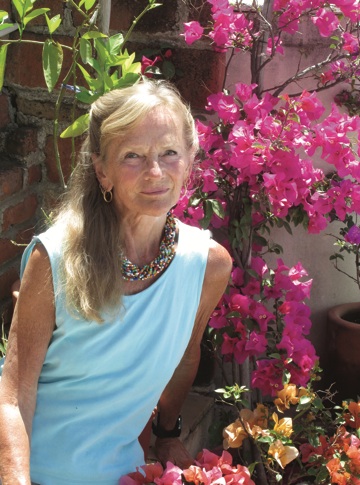
Bonnie Lee Black

Bonnie Lee Black is the author of the memoir Somewhere Child (Viking Press, 1981; now available as an eBook), which was instrumental in the creation of the National Center for Missing and Exploited Children. Her second memoir, about her U.S. Peace Corps service in Gabon, Central Africa, How to Cook a Crocodile (Peace Corps Writers, 2010), won a “Best in the World” award from Gourmand International in Paris in 2012. The manu­script for her Mali memoir, How to Make an African Quilt: The Story of the Patchwork Project of Ségou, Mali, won first place in the memoir-book category in the South­West Writers Annual Writing Contest, 2011.

Black earned a bachelor of arts degree with honors from Columbia University in New York in 1979 and an MFA in Creative Writing from Antioch University-Los Angeles in 2007. She worked as a professional writer and editor in New York City for twenty years and has been an educator in the United States and overseas for more than twenty years. Her essays have appeared in a number of published anthologies and literary journals.

She lived in Taos, New Mexico, and taught English and Creative Writing at UNM-Taos for more than ten years. In 2012 she was chosen one of the Remarkable Women of Taos and was featured in a book by the same title, compiled and edited by the late Elizabeth Cunning­ham. Now retired and living in San Miguel de Allende, Mexico, she writes an award-winning weekly blog called “The WOW Factor — Words of Wisdom from Wise Older Women”: www.bonnieleeblack.com/blog/.

For more information on the author, visit her ­website at www.bonnieleeblack.com.

Enjoy a sample of Bonnie’s talented book readings below—thanks to Moby Dickens Bookstore, Taos.